Girls in White Dresses
by Kristine Langley Mahler
The summer that we’ll turn sixteen, my best friend Emily and I seem put-on-pause, drooped over her living room couches, dreaming of our future husbands, making fun of these couples on TV. We’re watching “A Wedding Story” on The Learning Channel again. We’re hoping for the rerun of the Symbolic Crossing of the Ocean to Get to America, the one where Clem and Paul get married, because TLC gratuitously and unnecessarily made a point of featuring a shot of the bride’s family, who happens to be Japanese, crossing a ferry to get from an island to the mainland where the wedding was being performed.
Clem’s wedding dress is ugly—most of the dresses on the show usually are—with a big floppy bow on her ass and too much lace on the bodice. Clem’s dress is also cream-colored, which elicits a heated discussion about whether or not she could have actually worn white on her wedding day. Emily says she’s too ugly to have gotten lucky before marriage.
We’ve been on The Learning Channel all day. We avoid “A Baby Story,” the show that’s on before “A Wedding Story,” because we hate watching red-faced third-term mothers push their kids out, and we also hate looking at the moms in their ugly maternity clothes. Emily and I don’t think beyond the vows, the reception, the wild-and-kinky honeymoon sex that won’t result in anything if we’re “protected,” right?
Emily and I watch “Wedding,” as we’ve shortened it, because we like making fun of the people on the show. We like hearing their dumb how-we-got-together stories, and then we like trying to figure out which one of them had the idea that their wedding should be on “A Wedding Story”—it’s not always the girl. We critique the brides’ dresses, their choice of wedding location, the cheesy places they inevitably decide to have their night-before dinners. We decide whether or not the girl is pretty enough for the guy, if the guy is pretty enough for the girl, if they’ve gotten good genes from their parents, and whether or not their kids will be ugly.
I’m a tough critic when it comes to the grooms, especially when the men look like they know they’re attractive. I dismiss the guys, shouting, “Bad hair!” “Scugly smile!” “Stupid sweater!” even if the men in question have perfectly average receding hairlines, decent smiles, and are wearing bland sweaters in bland unoffensive colors. In this way, I dismiss my Freshman Obsession C and the way he used to poke me in the back during algebra II because he knew I liked him and he knew he could tease me and I’d take it. In this way I dismiss K for turning me down in ninth grade, Emily and Kathy acting as my emissaries, going to K’s house and asking him out for me because I was too embarrassed; I dismiss G and E and D and all the boys I’ve wanted who haven’t wanted me back by yelling at men on TV and hollering: “SHE’S TOO PRETTY FOR HIM!”
What lies beyond the wedding? Does it really matter? Apartment-hunting, job-searching, child-rearing (child-BEARING!)—all of this is ignored when Emily and I talk about the weddings because we see them as futures we’ll simply accept since they come with the territory of the band on our left ring fingers that says someone wants me.
One afternoon, Emily and I see the episode about the ultra-Christian couple who’ve never kissed each other. We can’t get over how the girl could date this guy for three years and is ready to marry him without ever having kissed him. What if he sucks at kissing? We both know that’s a possibility—the first time Emily got kissed, her eighth-grade boyfriend pushed her up against the elevator and stuck his tongue in her mouth, all warm and squishy and yucky, and she bit it. The first time I was kissed, the boy who was my make-believe husband clamped his jaws around mine and even though it hurt because his teeth were digging into the skin around my mouth, I kept kissing him, telling myself “This is what I waited for.”
And then the ultra-Christian couple’s long-awaited wedding kiss is so awkward that the two of us groan and change the channel, because we don’t want to hear the outro song insisting that “when the spark of youth someday surrenders” the bride will be kissing this risk that, for her sake, I hope pays off.
Our friend Katy got engaged two months ago. She was a junior and her boyfriend proposed at prom dinner. She’d told us beforehand that she knew he was going to do it that night, so Emily and I went to dinner with them because we wanted to see. We were desperately excited because we’d never known anyone engaged before. Emily and I nudged each other every time he took a hand off the table, but he chickened out and asked Katy to go back to the front of the restaurant with him, where he proposed out of our sight. When she came back to the table, she had a diamond on her finger and Emily and I oohed and aahed over it. Later that week, we asked Katy if she was really going to marry him and she said, “No, but I wanted the ring.”
Emily and I have seen some winners on Wedding. The best one was a ballerina’s wedding. She was married outside somewhere in Colorado, the mountains in the background. She had a simple sleeveless dress without too much lace and without a bow, and she had put her hair in a pretty bun. What I remember most was the delighted look on her face when she turned to kiss her new husband. But then there was the Halloween one—so gauche—they had the guests wear Halloween costumes to the ceremony. The bride and groom both looked Goth; he had stringy black hair, and she had brilliant red hair. He wore this gothic tux and she wore a silvery prom dress. I shook my head. Yuck. Not in my wedding.
Emily insists I’ll be married first and I have to promise to let her be my maid-of-honor. I say, “Dude, but we already agreed to be each other’s maid-of-honor!” And I don’t want to jinx myself by agreeing that I’ll be married first, so I counter, “Anyway, you’ll get married before me—I bet you 100 bucks. I will give you a hundred dollars if I get married before you! I guaran-fucking-tee you’ll get married before me. I swear to God there is no way I’ll get married first!” We’re serious enough to lay down rules, and we revise the terms of the original bet—first one to get engaged has to pay the other one $100. This is because we both know that if Emily got engaged and then I got engaged a few months later, she’d hold out for a month until after I got married to get married herself so she could technically win the bet, and I know I’d do the same.
It’s nearly August, our summer freedom drawing to a close, when there’s this wedding with a girl who’s short and stubby with boring brown hair and bad ‘80s bangs. Not that her dress makes her look any better—there are bows everywhere, a big bow on her ass, no cleavage or bare shoulders, and then to top it off, she’s wearing this scary-looking white horse-rider’s helmet with a veil. She’s marrying some guy who’s about as attractive as her, so at least there’s that—he’s a little gnome of a man with combed-over greasy hair and a simple country-boy expression. Their wedding takes place at half-time in the middle of a horse show, and the couple parades in and actually gets married on the horses—of course, she’s on a white one—and the vows include an obligatory reference to “my knight in shining armor.” We’re still shouting about how ugly the bridesmaid dresses are and how corny it is to get married at a horse show until they cut to the mother at the reception in some stable-like place, talking about how happy she is for her daughter. She says, “We never thought ______ would get married (pauses to dab at her eyes). It was the impossible dream.” The mother’s disbelief that her daughter would ever get married is what shuts us up. Without our bitter commentary, we let the bride and groom have their joyful kiss onscreen as the outro music swells. Neither of us say a thing, even after they cut to commercials.
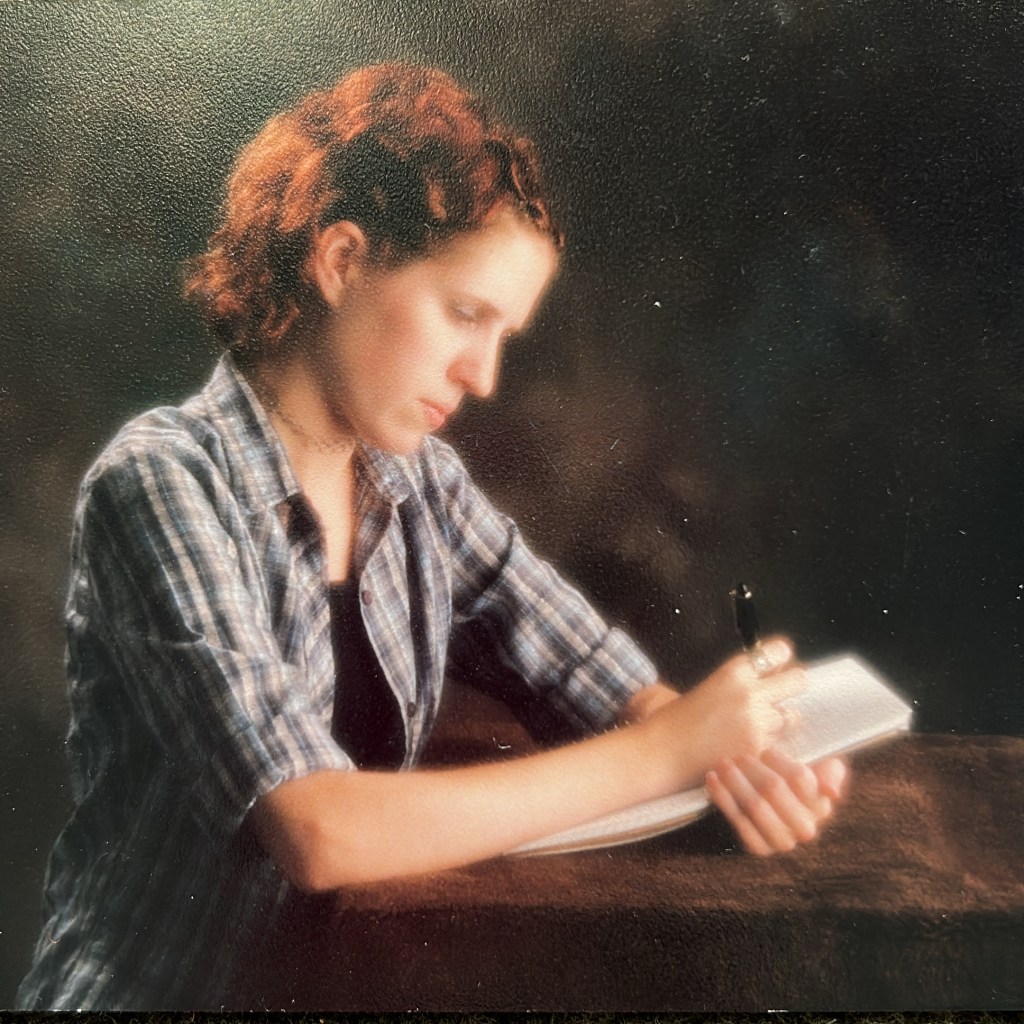
Kristine Langley Mahler is the author of three nonfiction books, TEEN QUEEN TRAINING, A CALENDAR IS A SNAKESKIN, and CURING SEASON: ARTIFACTS. Her work has been supported by the Nebraska Arts Council and Art at Cedar Point and thrice named Notable in Best American Essays. A memoirist experimenting with the truth on the suburban prairie, Kristine makes her home outside Omaha, Nebraska. She is the director of Split/Lip Press. Her favorite pizza toppings are pepperoni and green chile peppers, which she ordered once from a Domino’s in Aztec, New Mexico and promptly ascended into heaven.
 Forget Cool